by Marion Nestle

Currently browsing posts about: Uncategorized

Jan 20 2026

RIP USDA’s Household Food Security reports

Last September, the USDA said it would stop conducting the annual hunger survey, because they were “redundant, costly, politicized, and extraneous.”

As I said at the time,

If you live in an Orwellian universe, you can use not measuring to pretend that food insecurity does not exist and certainly that it is not increasing as a result of your policies.

It took a long time for the anti-hunger community to achieve federal documentation of this enormous social problem.  I suppose we will now have to go back to the old days of local anti-hunger reports.  See my comments (with Sally Guttmacher) on state hunger reports.

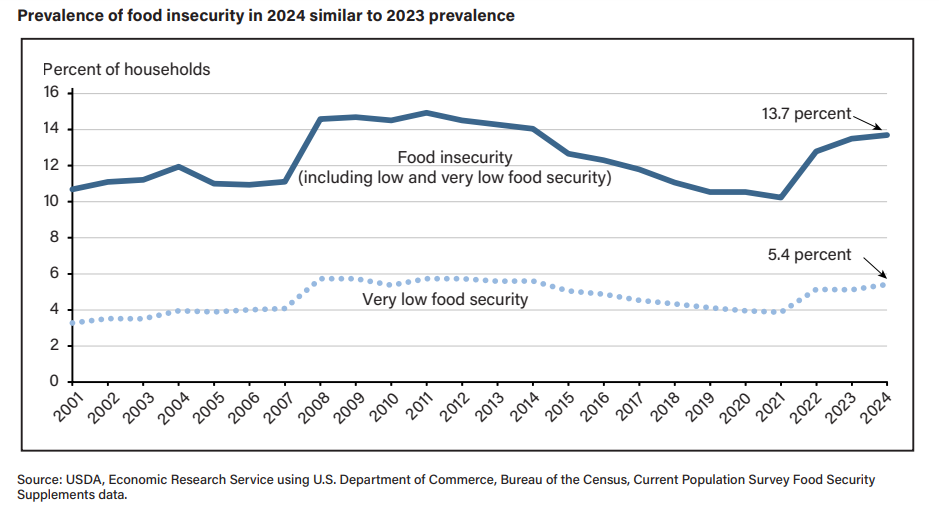
On December 30, the USDA published the last of its formerly annual reports: 2024 Household Food Security report.

The inconvenient finding continues: food insecurity continues to rise.

And this was before the current Trump-era cuts to SNAP and increases in the cost of food and health care.

No wonder they don’t want to publish reports like these any more.


Jan 19 2026

Industry-influenced studies of the week: artificial sweeteners

The new Dietary Guidelines have advised against consuming non-nutritive sweeteners despite research testifying to their harmlessness.  Much such research is funded by groups representing makers of artificial sweeteners, as these two examples show.

Study #1: A Systematic Review of Nonsugar Sweeteners and Cancer Epidemiology Studies Adv Nutr. 2025 Dec;16(12):100527. doi: 10.1016/j.advnut.2025.100527.

Method: review of epidemiology studies of NSS intake and the risks of all types of cancer.

Results:  Overall, the epidemiology evidence does not support associations between any NSS and any cancer type.

Conflict of interest: All authors are employed by Gradient, Geosyntec, or the American Beverage Association (ABA). Gradient and Geosyntec are environmental and risk sciences consulting firms. ABA is the trade association that represents America’s non-alcoholic beverage industry.

Funding: ABA provided funding for this paper, which was written during the authors’ normal course of employment. This paper represents the professional opinions of the authors and not those of ABA.

Study #2:  Lack of Genotoxic and Carcinogenic Potential for Nonsugar Sweeteners: A Review of Animal and Mechanistic Evidence.  Adv Nutr. 2025 Dec;16(12):100552. doi: 10.1016/j.advnut.2025.100552. Epub 2025 Nov 4.

Method: review of the available experimental evidence.

Results: high-quality studies have not shown evidence for carcinogenicity in animal models, except for saccharin, which causes bladder tumors in rats via a mechanism not relevant to humans.

Conclusions:  The results of this evaluation are consistent with the results of epidemiology studies, which have shown no consistent associations between NSS intake and cancer risk. Taken together, the body of available evidence supports previous conclusions by authoritative and regulatory bodies that Ace-K, advantame, aspartame, cyclamate, neotame, saccharin, steviol glycosides, and sucralose do not pose a genotoxic or carcinogenic risk to humans.

Conflict of interest: All authors are employed by Gradient or the American Beverage Association (ABA). Gradient is an environmental and risk sciences consulting firm. ABA is the trade association that represents America’s nonalcoholic beverage industry. This paper represents the professional opinions of the authors and not those of ABA.

Comment

These are two studies paid for by the American Beverage Association and conducted by paid consultants or employees to produce research favorable to the use of artificial sweeteners, which these studies did.

Research on artificial sweeteners is especially difficult to do because the amounts consumed are so small relative to other dietary components.  In general, independently funded research tends to find more problems associated with use of non-nutritive sweeteners than does industry-funded research.  This is an example of the “funding effect,” the by this time well documented influence of sponsorship on research outcome.

Jan 16 2026

The MAHA Dietary Guidelines VII: The Documents

A brief note about the political history of the dietary guidelines.  When I was on the Dietary Guidelines Advisory Committee in 1995, our committee selected the topics for review, reviewed the science, wrote the scientific report, and wrote the dietary guidelines.  We did the whole thing, except for the USDA’s food guide pyramid.   For this version, HHS and USDA ignored the scientific report and appointed a committee to do the rest.  They got all this done in a year, which must have been one big rush.

The press release

This was confusing because its list of recommendations differs from those in the actual guidelines, does not use the term “Eat Real Food,” and does not list the accompanying documents.

  • Prioritize protein at every meal
  • Consume full-fat dairy with no added sugars
  • Eat vegetables and fruits throughout the day, focusing on whole forms
  • Incorporate healthy fats from whole foods such as meats, seafood, eggs, nuts, seeds, olives, and avocados
  • Focus on whole grains, while sharply reducing refined carbohydrates
  • Limit highly processed foods, added sugars, and artificial additives
  • Eat the right amount for you, based on age, sex, size, and activity level
  • Choose water and unsweetened beverages to support hydration
  • Limit alcohol consumption for better overall health

Fact Sheet

This sends up red flags.  Anytime I hear suggestions that everything you thought you knew about nutrition is wrong, I think uh-oh.  Science doesn’t work that way.  But these guidelines are not about science.  They are about politics.  They say Americans are sick

because their government has been unwilling to tell them the truth. For decades, the U.S. government has recommended and incentivized low quality, highly processed foods and drug interventions instead of prevention. Under the leadership of President Trump, the government is now going to tell Americans the truth.

Vast numbers of nutrition scientists have been lying about healthy diets?  Seems unlikely.

Dietary Guidelines for America 2025-2030

The only place where the message “eat real food” appears is in the secretaries’ introduction: “The message is simple: eat real food.”  Weirdly, that political message is not part of the actual guidelines.  These are:

  • Eat the right amount for you
  • Prioritize protein foods at every meal
  • Consume dairy
  • Eat vegetables & fruits throughout the day
  • Incorporate healthy fats
  • Focus on whole grains
  • Limit highly processed foods, added sugars, & refined carbohydrates
  • Limit alcoholic beverages

Press conference video

You can watch HHS and USDA official enthuse about the new guidelines and pyramid.

Eat Real Food: The Interactive Website

Here, at last, is where you get the real-food message: “whole, nutrient-dense, and naturally occurring.”  It is also where you get a sense of the guidelines’ priorities: “Every meal must prioritize high-quality, nutrient-dense protein from both animal and plant sources” (meat and full-fat dairy come first).  The site provides links to the scientific reports and the servings document, and also a Q & A.

The Scientific Foundation for The Dietary Guidelines of America

This 90-page document was produced by a committee appointed by HHS and USDA to redo the work of the Scientific Advisory Committee because “Equity considerations and public policy preferences pervaded the DGAC Report. The Committee consistently advocated plant-based dietary patterns, deprioritized animal-sourced proteins, and favored high linoleic acid vegetable oils.” Instead, this committee is ostensibly “free from ideological bias, institutional conflicts, or predetermined conclusions.” The report lists their ties to meat, dairy, and other food associations with vested interests in what the guidelines might say.  There’s some surprising stuff in here: “Supporting testosterone health in men.”

Scientific Foundation Appendices

This is 418 pages of research review.  For this, I am taking the easy way and quotinKevin Klatt’s detailed analysis.

Their whole basis is that nutrition is the key determinant of chronic disease risk, that you need to take personal responsibility to reduce your risk and that you’ve been lied to by past administrations who’s recommendations caused your health issues….There is no illusion from reading the Review and Appendix that the DGAs resulted from a rigorous and transparent process that pre-registered questions to be addressed, reviewed the data, and got the experts in a room to set down a common measuring stick by which they’re assessing the evidence- the approach is little more than a gish gallop to support the preformed conclusions that the HHS Secretary, MAHA advocates and influencers have been pushing since the moment they got into office. 

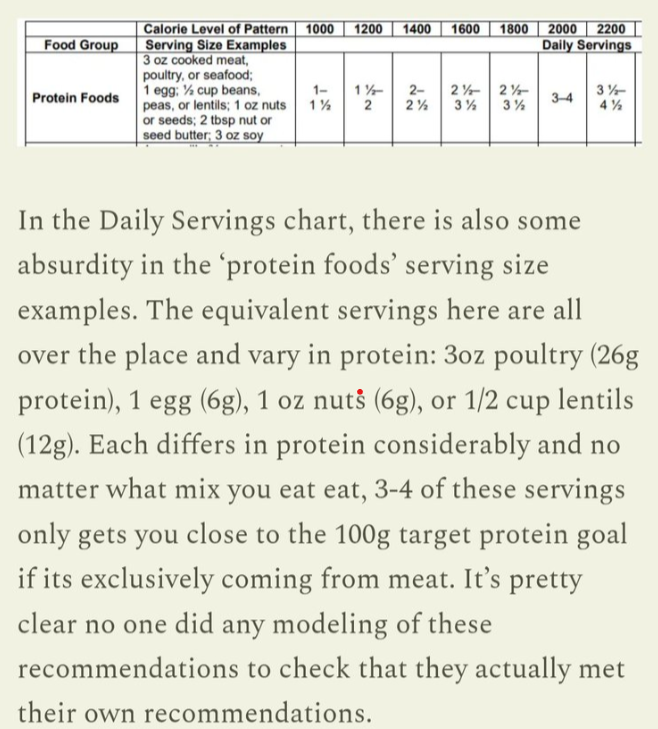
Daily Servings by Calorie Level

This one came as a surprise.  I wish it had been included with the guidelines because it specifies what the guidelines actually mean in practice.

South Park’s take on this

History of the Dietary Guidelines and Pyramid

My version of this history

I have written extensively about dietary guidelines and food guides on this site since the 2010 guidelines and pyramid.  Search for either term.  Here is a selection of my academic papers on the topic.

Other views

Jan 15 2026

The MAHA Dietary Guidelines VI. Some Concluding Thoughts.

Let’s start with what I like about the 2020-2030 Dietary Guidelines and New Pyramid, taken together.

Eat Real Food

It’s how I eat, and prefer to eat.

It’s consistent with Michael Pollan’s Eat food.  Not too much.  Mostly plants.

Pollan’s version, to which I subscribe, is supported by at least three of the guidelines:

  • Eat vegetables & fruits throughout the day
  • Focus on whole grains
  • Limit highly processed foods, added sugars, & refined carbohydrates

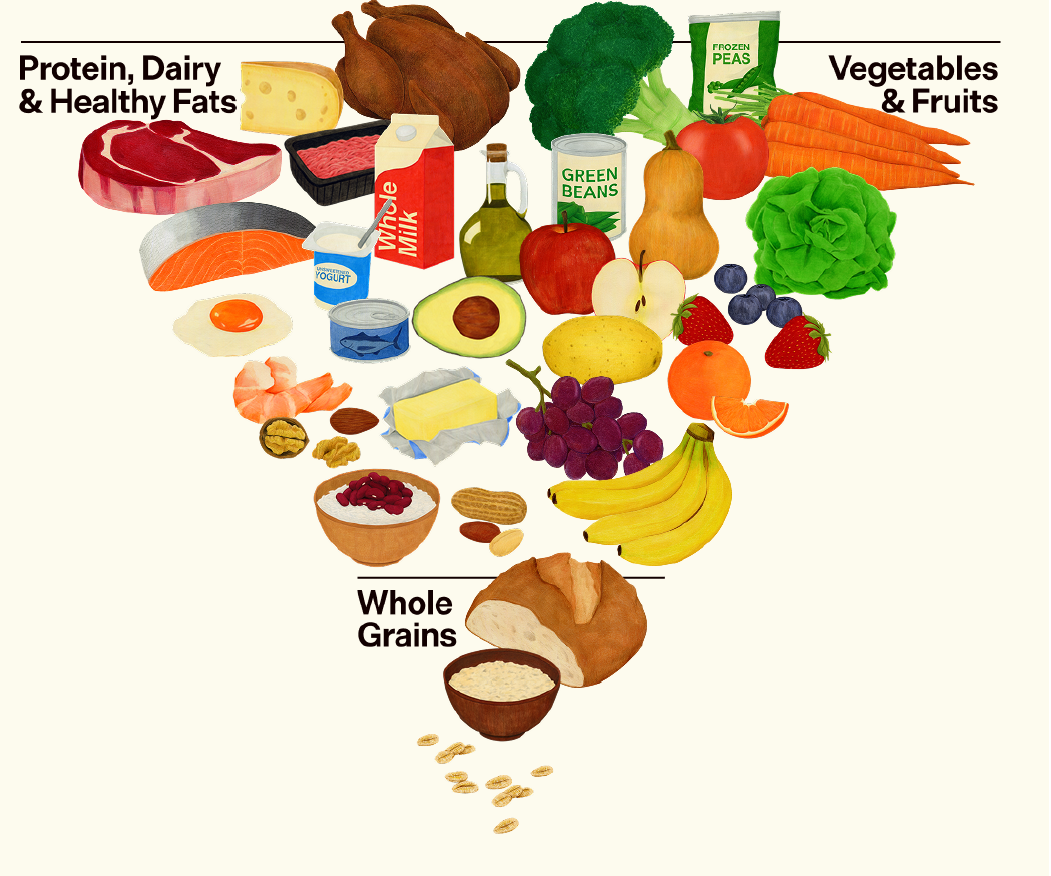
The New Pyramid

It’s bright and cheerful.

It illustrates a basic nutrition message: eat a wide variety of foods from all food groups.

It’s possible to eat healthfully following this diagram if eating a wide variety of foods and balancing calories.

It’s consistent with food movement objectives, and is bringing attention to these objectives.

What’s missing and I wish were included

  • Eat Real Food as the first dietary guideline
  • Greater emphasis on plant sources of protein
  • Inclusion of whole grain foods in the “eat more” part of the pyramid
  • Policy support

The need for policy

Much about these guidelines and food guides connects with long-desired objectives for a food system aimed at promoting the health of people and the planet.  As I noted in an earlier post, these guidelines focus explicitly on personal responsibility, not system change.

To create a food system that supports eating according to these guidelines and pyramid, we need:

  • Agricultural subsidies: for foods for people (not feed for animals or fuel for automobiles, as the current system does)
  • School food: kitchens and cooks in every school, gardens wherever possible, and enough money to pay for real food
  • Education: cooking classes for kids and adults, men as well as women
  • Equity: enough money to buy real food, and the space, equipment, and time to prepare it

I will have more to say about all this as time goes on, so stay tuned.

Jan 14 2026

The MAHA Dietary Guidelines V. The Alcohol Non-Recommendation

The Dietary Guidelines for America 2025-2030 simply say “Limit alcoholic beverages: Consume less alcohol for better
overall health.”  They go on to specify who should not drink alcohol.

People who should completely avoid alcohol include pregnant women, people who are recovering from alcohol use disorder or are unable to control the amount they drink, and people taking medications or with medical conditions that can interact with alcohol. For those with a family history of alcoholism, be mindful of alcohol consumption and associated addictive behaviors.

This guideline

  • Does not specify what is meat by “limit” or “less.”
  • Does not mention cancer as a risk of alcohol consumption.

These are big issues.  Excessive alcohol intake poses problems for society as well as for individuals: car accidents and gun violence, for example.

From a public health perspective, the lower the overall level of alcohol consumption in a population, the fewer the health and societal problems it causes.  The overall message always should be: drink as little alcohol as possible.

This message is complicated by evidence, highly contested, that low levels of alcohol might reduce risks for heart disease and overall mortality.  Even if correct, advice about alcohol would need to balance the purported benefits for heart disease against risks for cancer, particularly breast cancer.

The Biden-era 2025 Dietary Guidelines Advisory Committee did not discuss alcohol because the agencies were waiting for the results of commissioned reports on alcohol and health.  As it happened, three reports came out just after the DGAC submitted its report late in 2025.

Even so, the take-home lesson from all of these reports is that less alcohol is better.

At issue is how much less.

As I’ve explained previously, the dietary guidelines have long stated that 2 drinks a day for men and 1 for women (because women metabolize alcohol differently) is a safe amount.

The omission of these limits is difficult to interpret.  Do these guidelines consider those limits too low or too high?

At the press conference, Mehmet Oz said:

Alcohol is a social lubricant that brings people together. In the best-case scenario, I don’t think you should drink alcohol, but it does allow people an excuse to bond and socialize, and there’s probably nothing healthier than having a good time with friends in a safe way..You look at the Blue Zones, for example, around the world, where people live the longest. Alcohol is sometimes part of their diet…Again, small amounts. There is alcohol on these dietary guidelines, but the implication is don’t have it for breakfast.

Yes, but what is a “small amount?”  And what about cancer risk?  Shouldn’t people be warned?

As Roni Rabin put it:

Though there is robust debate within the medical community as to the relationship between moderate drinking and various forms of cardiovascular disease, there is more scientific certainty about the link between alcohol and at least seven types of cancer. Warnings about alcohol increasing the risk of breast cancer were included in the dietary guidelines 25 years ago. Former Surgeon General Dr. Vivek Murthy last year called for putting cancer warning labels on alcoholic beverages, similar to those for cigarettes.

The alcohol industry works unceasingly to convince everyone that alcohol poses no health risks.  Unfortunately, it does.

Yes, consume less, but how much less?  The guidelines leave this up to you to decide.

I see these dietary guidelines as a big win for the alcohol industry.

No wonder it supports them so enthusiastically: Distilled Spirits, Beer & Wine Associations Support New Health and Human Services 2025-2030 ‘Dietary Guidelines for Americans’

Moderation?  Whatever you think it means.

Jan 13 2026

The MAHA Dietary Guidelines IV: Eat more meat!

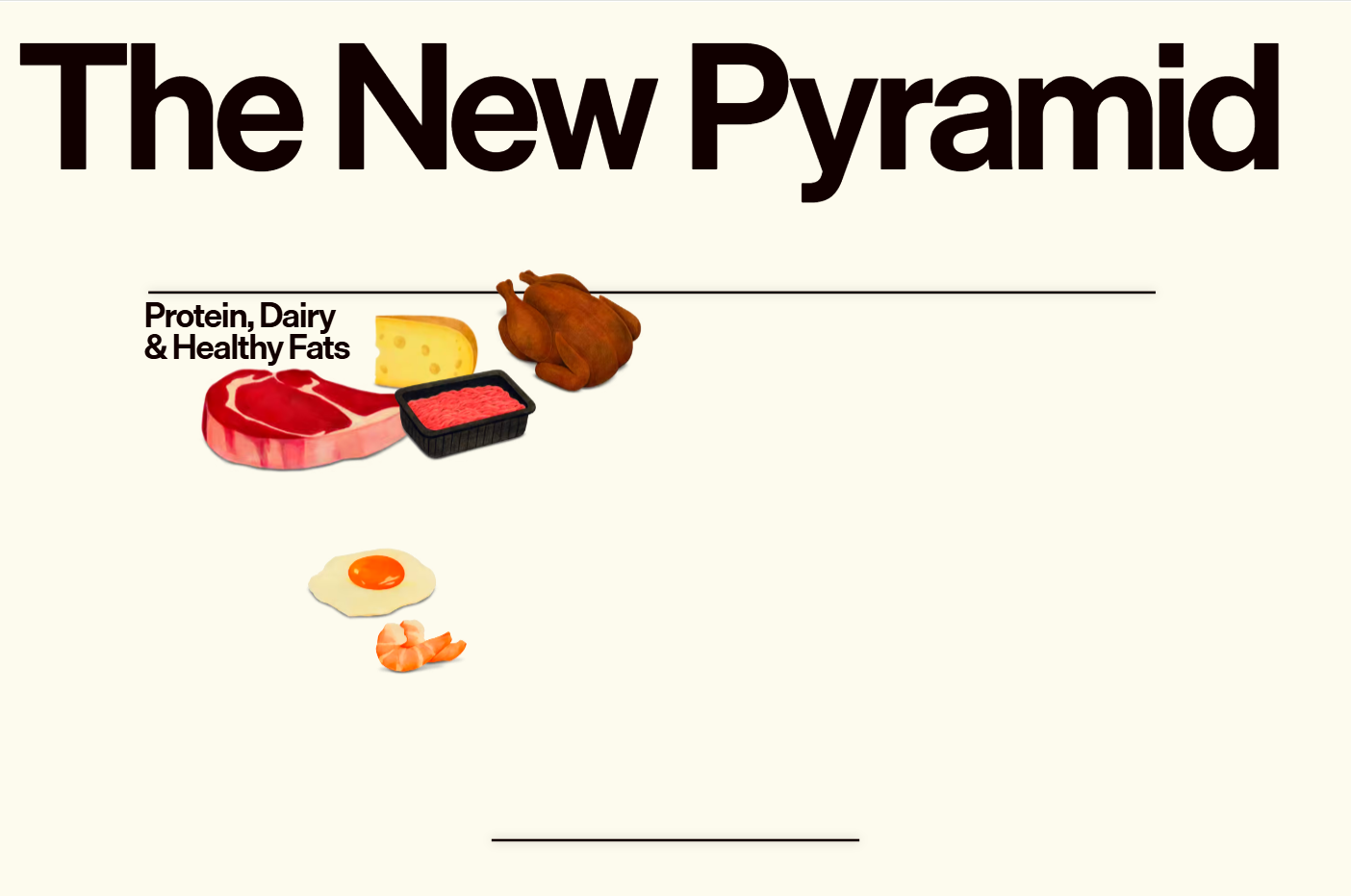
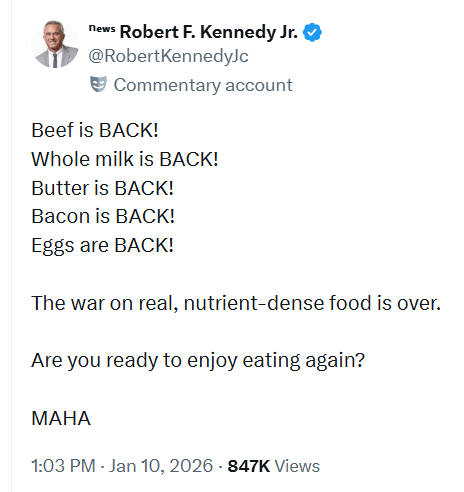
The Eat Real Food Website says “We are ending the war on protein. Every meal must prioritize high-quality, nutrient-dense protein from both animal and plant sources….” But here’s what comes up first and is clearly the first priority.

And here’s an exultant RFK Jr on X:

Protein is well understood to be a euphemism for meat.  I’ve already written about how most people already eat twice the protein needed so advice to eat more of it is unlikely to do anyone any good.

And the document, Daily Servings by Calorie Level, makes it clear that you have to eat meat if you are going to reach the level of protein intake recommended.  For this, I am indebted to Kevin Klatt, who posted this on X.

What’s wrong with recommending more meat?

  • It’s healthier getting protein from plant sources.
  • The way we produce meat pollutes the environment with pesticides and herbicides to grow their feed.
  • It also presents major food safety hazards (see Eric Schlosser’s update on Fast Food Nation)
  • Cattle burp methane and are the single largest food source of greenhouse gas emissions.
  • Beef cattle are raised in CAFOs under crowded and dirty conditions.
  • The meat industry exploits workers.
  • Consolidation in the meat industry keeps prices high (Tyson’s just agreed to an $82.5M settlement in a beef price-fixing lawsuit)
  • Producing meat the way we do is not sustainable and adds to inequities.

Of course, sustainability and equity are non-topics for this administration.  But they matter and should very much be on the table for discussion.

We already eat plenty of meat—more than 100 pounds per capita per year of red meat alone (according to USDA).  We don’t need to be eating more.

Correction

In my first post on these dietary guidelines, I said:

Some of the instructions don’t make sense: “Consume meat with no or limited added sugars?”  Who does this?

Several readers wrote to object.  Renata M, for example, said she could think of so many examples, she just had to say something.

  • BBQ sauce
  • Ketchup
  • Teriyaki sauce
  • Other popular “Chinese” foods
  • Brown sugar-glazed pork chops
  • Pasta sauce
  • Sloppy Joe’s
  • Brines and marinades
  • and more, if honey and maple syrup are considered added sugars [they are]

Oops. Sorry about that.  Thanks!

Jan 12 2026

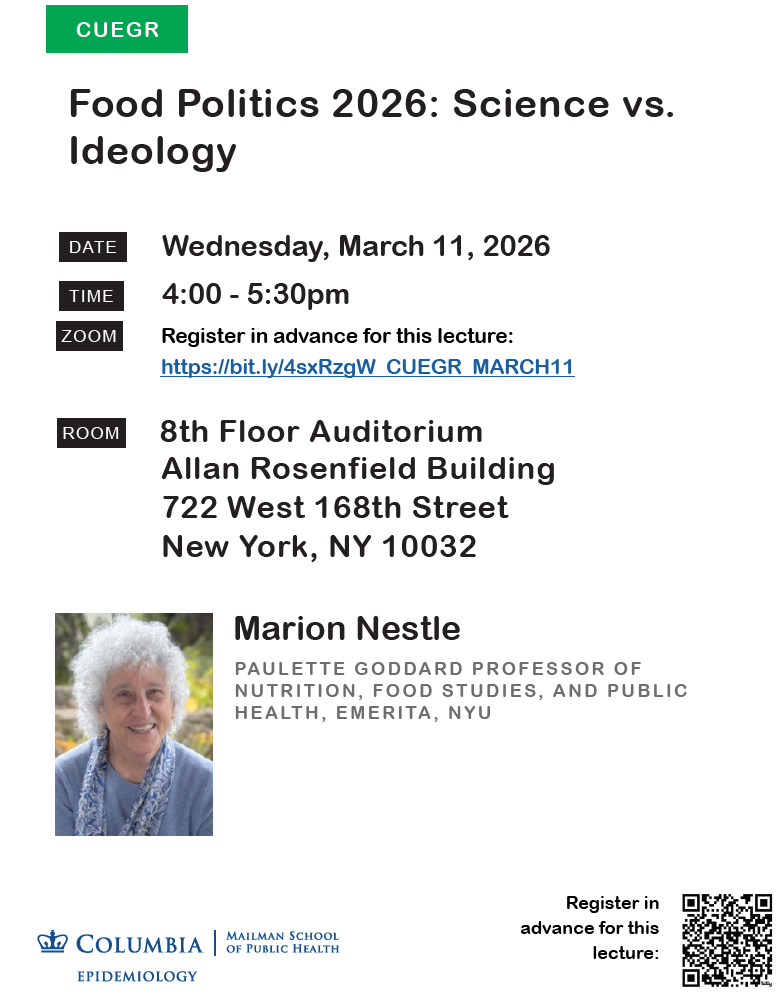
Columbia University Epidemiology Grand Rounds

Register for this here.

Jan 12 2026

The MAHA Dietary Guidelines III: Conflicts of Interest

On Mondays, I typically post something about industry-funded research or investigator conflicts of interest.

In the light of Robert F. Kennedy’s complaints about conflicts of interest in previous dietary guidelines advisory committees, it is startling to observe the industry ties reported by members of this administration’s committee.

These conflicted interests are also surprising in light of the high prioritization of meat in these guidelines, which advise eating protein (a commonly understood euphemism for meat) in every meal, and high-fat dairy.

The committee’s membership and disclosures are given on pages ix-xviii of the Scientific Foundation report.

To focus just on ties to meat and dairy groups, members report financial ties to

  • Global Dairy Platform
  • Nutricia/Danone
  • National Cattlemen’s Beef Association
  • Texas Beef Council
  • American Dairy Science Association
  • National Dairy Council
  • National Pork Board
  • California Dairy Innovation Center
  • Fonterra Limited
  • California Dairy Research Foundation
  • Dairy Management Inc

This was reported originally in Stat News (which quotes me elsewhere in the story).

It’s unclear how the Trump administration appointed its group of nutrition scientists and other researchers. A scientific report linked at the bottom of a new federal website, RealFood.gov, says only they were chosen through “a federal contracting process based on demonstrated expertise.”

Merrill Goozner quickly picked up the story on his GoozNews substack ( <gooznews@substack.com>): “Advisors to new nutrition guidelines rife with conflicts of interest”

So a tip of the hat to RFK, Jr. for fully disclosing that information. But put a dunce cap on his hypocritical head for allowing onto the review panel six reviewers with financial ties to corporate interests with a direct stake in the outcome of the guidelines. There is no evidence that this committee, two-thirds of whom have ties to industry, received vetting under the Federal Advisory Committee Act of 1948.

The New York Times story points out the hypocrisy (I’m also quoted later in this one):

Soon after Robert F. Kennedy Jr. was sworn in as the nation’s health secretary, he promised to overhaul the federal nutrition guidelines. A key step, he said, would be to “toss out the people who were writing the guidelines with conflicts of interest.”

His own panel, he said, would “have no conflicts of interest.” But the new guidelines, which were released Wednesday and emphasize protein, meat, cheese and milk, were informed by a panel of experts with several ties to the meat and dairy industries.

The Times quotes Mark Kennedy, the senior vice president of legal affairs for the Physicians Committee for Responsible Medicine, which supports plant-based diets and has filed a complaint with the government saying it should withdraw the guidelines.

Disclosing conflicts of interest at the end of the process “isn’t really going to cut it..Because if nobody ever had a chance to weigh in, and nobody other than the government behind closed doors had a way to assess it, there’s no way to ensure there’s fair balance.” (Mr. Kennedy is not related to the health secretary.)

Comment

In reading through press accounts, I’m pretty sure I saw one where one of the committee members reporting financial ties tossed it off with some comment about how he was sticking to the science and that’s all that mattered (I’ve searched but can’t find it now).

I heard that a lot after publication of my book, Unsavory Truth: How Food Companies Skew the Science of What We Eat.  In that book, I review research on the “funding effect,” the strong correlations between who pays for food and nutrition research and its outcome.  Industry-funded research tends to produce results favorable to the funder’s interests (otherwise it wouldn’t be funded).  But recipients of funding typically did not intend to be influenced and do not recognize the influence.  It is not surprising that this committee—unlike many other scientific committees over the past decades—came to precisely the conclusions decided in advance by Secretaries Kennedy and Rollins.