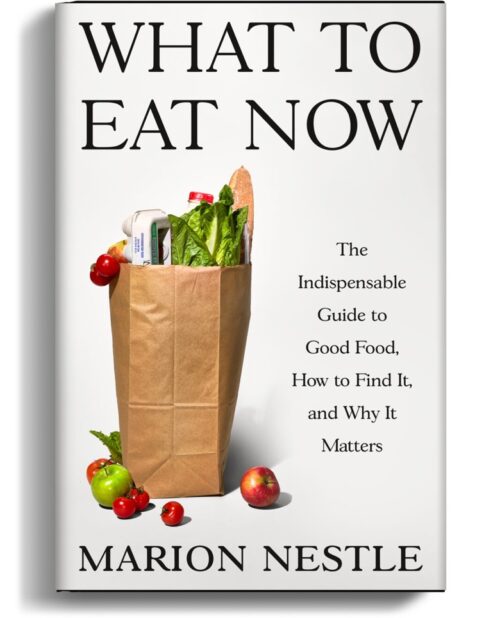
The official launch will be at NYU’s Library, most likely at 4:00 p.m. Co-author Lisa Sutherland will be present. Details and registration to follow.

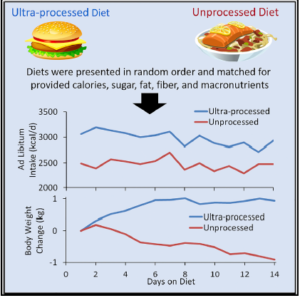
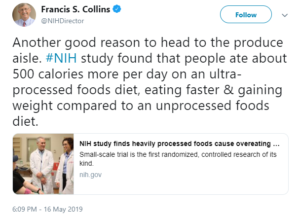
Kevin Hall at NIH has done a controlled diet study demonstrating that people who consume ultra-processed foods eat more calories—500 more a day (!)—and, therefore, gain weight.
Carlos Monteiro at the University of São Paulo and his colleagues explain how to identify ultra-processed foods.
They also demonstrate that ultra-processed foods comprise nearly 60 percent of calorie intake.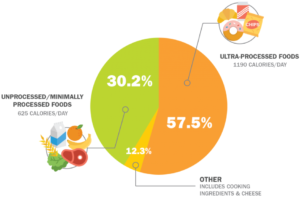
No surprise. Calories matter, as Mal Nesheim and I explained in our book Why Calories Count: From Science to Politics (and thanks Kevin for confirming what we wrote in that book).
The clear conclusions of this study have elicited a lot of attention. Here’s my favorite from Francis Collins, the head of NIH and Kevin Hall’s boss, who also did a blog post:
Examples of media accounts (there were lots more)
The official launch will be at NYU’s Library, most likely at 4:00 p.m. Co-author Lisa Sutherland will be present. Details and registration to follow.