Information about the Aspen Ideas Festival is here. I am scheduled for a session, The American Wellness Paradox, currently scheduled from 11:00-11:50 a.m., at the East Lawn Tent. This will be a discussion with senior HHS policy advisor, Calley Means. Here’s the blurb on it: “Americans are spending more than ever on healthcare, supplements, wellness trends, and “clean eating,” yet rates of chronic disease and metabolic illness continue to climb. As skepticism fuels the rise of movements like MAHA, debates over what Americans should eat have become deeply cultural, political, and economic. Two influential voices with sharply different perspectives on nutrition and food science explore how food systems, farming practices, consumer culture, and the wellness industry collided to create one of the defining public health debates of our time.”

Food is getting safer, baby step by baby step
Chase Purdy writing in Quartz says “The system for catching dangerous pathogens in America’s food supply is finally working.”
Here’s the best evidence: the remarkable decline in cases of STEC (Shigella Toxin E. Coli).
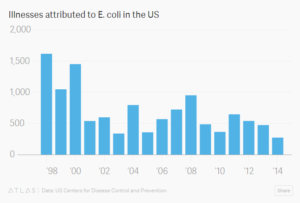
Quartz quotes food safety lawyer Bill Marler: “You look back over time and, from 1993-2003, about 90% of my firm’s revenue was from E. coli cases connected to hamburger.”
What changed? Regulation.
The USDA now considers STEC to be an adulterant and does not permit meat and poultry contaminated with it to be sold.
But then there’s Salmonella. It is not considered an adulterant. Why not? Because it occurs so frequently that USDA considers it normal. Cases of Salmonella have not declined as much as they should.
In the meantime, the FDA is diligently following through on its food safety rulemaking. On August 24, it opened three more sets of draft guidance documents for public comment.
- Draft Guidance for Industry #235 – Current Good Manufacturing Practice Requirements for Food for Animals: helps producers of animal feed comply with Good Manufacturing Practice requirements. And see . Federal Register Notice for the Draft Guidance for Industry on Current Good Manufacturing Practice Requirements for Food for Animals
- Draft Guidance for Industry #239 – Human Food By-Products for Use as Animal Food: helps providers of byproducts of human food production with how to use them safely in animal feed. And see Federal Register Notice for the Draft Guidance for Industry on Human Food By-Products for Use as Animal Food
- Draft Guidance for Industry for Classification of Activities as Harvesting, Packing, Holding, or Manufacturing/Processing for Farms and Facilities: helps food companies decide if and how FSMA rules apply to their operations. And see Federal Register Notice for the Draft Guidance for Industry for Classification of Activities as Harvesting, Packing, Holding, or Manufacturing/Processing for Farms and Facilities
When we were drafting and seeking public comment on the rules that will implement theFDA Food Safety Modernization Act (FSMA), we promised that we would do whatever we could to help the regulated industry understand and meet the new requirements….Meeting the FSMA mandate involves cooperation between the FDA and the food industry. From the smallest food operation to the largest company, we want to be sure that we’re all on the same page and these draft guidances will help get us there.
Onward and upward. This is progress. It would be nice if it went faster but it’s real progress—even if Bill Marler still has plenty of work to stay busy.